A new strain of coronavirus (officially named COVID-19), which has caused respiratory diseases in China, and spread to 24 other countries, has been declared a public health emergency of international concern (PHEIC) by the World Health Organization (WHO). Here are some basic facts you need to know about the virus.
Hundreds have now died from the COVID-19 virus, which first appeared in the Chinese city of Wuhan in December 2019. Tens of thousands of cases have been confirmed in China, and experts say they expect the numbers to rise further.
Although the vast majority of cases have been in China, the virus, which can cause pneumonia, is worrying global health authorities. Dozens of cases have been confirmed in 24 countries, and two deaths have been recorded outside of China (in Japan and the Philippines). Most of those affected by the virus had travelled from Wuhan, the epicentre of the outbreak.
This is only the fifth time that the World Health Organization has declared a public health emergency of international concern.
This is my favourite book. I found about it from my best friend.
Anne of Green Gables is a 1908 novel by Canadian author Lucy Maud Montgomery (published as L.M. Montgomery). Written for all ages, it has been considered a classic children’s novel since the mid-twentieth century. Set in the late 19th century, the novel recounts the adventures of Anne Shirley, an 11-year-old orphan girl, who is mistakenly sent to two middle-aged siblings, Matthew and Marilla Cuthbert, who had originally intended to adopt a boy to help them on their farm in the fictional town of Avonlea on Prince Edward Island, Canada. The novel recounts how Anne makes her way through life with the Cuthberts, in school, and within the town.
The book has been adapted as films, made-for-television movies, and animated and live-action television series. Musicals and plays have also been created, with productions annually in Europe and Japan.
The 2030 Agenda for Sustainable Development, adopted by all United Nations Member States in 2015, provides a shared blueprint for peace and prosperity for people and the planet, now and into the future. At its heart are the 17 Sustainable Development Goals (SDGs), which are an urgent call for action by all countries – developed and developing – in a global partnership. They recognize that ending poverty and other deprivations must go hand-in-hand with strategies that improve health and education, reduce inequality, and spur economic growth – all while tackling climate change and working to preserve our oceans and forests.
Self-compassion, on the other hand, encourages you to acknowledge your flaws and limitations, allowing you to look at yourself from a more objective and realistic point of view. Both have merits, but many experts believe that self-compassion includes the advantages of self-confidence without the drawbacks.
In his book, Mr. Barker asserts that productivity culture often promotes faking confidence without considering these drawbacks. Namely, when you fake it, you may start to believe your own lie, which can lead to disastrous outcomes.
Because confidence feels good “we often don’t notice when it creeps across the line to overconfidence,” Mr. Barker said. This is better known as the Dunning-Kruger effect: a cognitive bias in which you overestimate your ability in something.
But this isn’t to say you have to go around feeling inadequate. Dr. Kristin Neff, an associate professor of educational psychology at the University of Texas, suggests a solution to the problem of overconfidence: self-compassion.
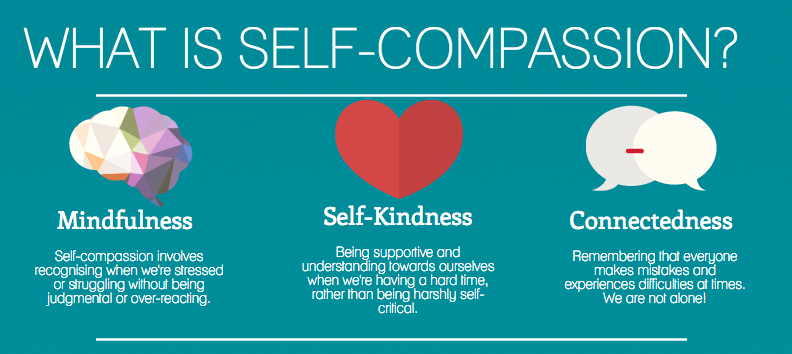
“Self-compassion is treating yourself with the same kindness, care and concern you show a loved one,” Dr. Neff said. “We need to frame it in terms of humanity. That’s what makes self-compassion so different: ‘I’m an imperfect human being living an imperfect life.’”
By that definition, self-compassion is the opposite of overconfidence. Admitting we have flaws just like anyone else keeps us connected to others, Dr. Neff said, and also keeps us from exaggerating our flaws or strengths. Unlike overconfidence, which attempts to hide self-doubt and other pessimistic shortcomings, self-compassion accepts them. Self-compassion, Mr. Barker writes, includes the benefits of confidence without the downside of delusion.
“A lot of people think self-compassion is weak, but it’s just the opposite,” Dr. Neff said. “When you’re in the trenches, do you want an enemy or an ally?” Whereas confidence is aimed at feeling adequate and powerful despite how adequate and powerful you actually are, self-compassion encourages you to accept a more objective reality.
For example, a study published in the Journal of Personality and Social Psychology asked people to describe themselves while being recorded on video. Those subjects were then told they would be rated on how likable, friendly and intelligent they seemed in the video. Subjects who had high levels of self-compassion had generally the same emotional reaction no matter how they were rated. By contrast, people with high levels of self-esteem had negative emotional reactions if the feedback was simply neutral and not exceptional. They were also more likely to blame unexceptional ratings on outside factors.
“In general, these studies suggest that self-compassion attenuates people’s reactions to negative events in ways that are distinct from and, in some cases, more beneficial than self-esteem,” the researchers concluded.
Without the pressure to be superhuman, it’s easier to accept feedback and criticism. It’s much harder to learn and improve when you believe you already know everything.
Dr. Neff said resilience may be the most remarkable benefit of self-compassion. In one study, she and her colleagues worked with veterans returning from war in Iraq and Afghanistan. The subjects worked with clinical psychologists who determined that nearly half of the group (42 percent) experienced symptoms of post-traumatic stress disorder. Using a 26-item self-report questionnaire that included statements like, “I’m tolerant of my own flaws and inadequacies,” Dr. Neff and her colleagues rated subjects’ level of self-compassion. The study concluded that the more self-compassionate veterans were, the less severe their PTSD symptoms were.
Dr. Neff added that self-compassionate people also tend to ruminate less because they can “break the cycle of negativity” by accepting their own imperfections.
Still, of course, there are many benefits to being confident, even if it’s a put-on. A study published in the Journal of Personality and Social Psychology found that simply appearing more confident makes people believe you deserve more respect and admiration, possibly helping you reach higher social status. Another study published in Plos One found that when people are overconfident, others overrate them as smarter and more skilled. In other words, there’s something to the “fake it until you make it” phenomenon.
But self-compassion and acceptance can offer a whole suite of other benefits: It’s easier for self-compassionate people to improve on those mistakes, failures or shortcomings because they view them more objectively. Research shows self-compassion is an effective motivator in this way.
Self-compassionate people are better at owning up to their mistakes. Juliana Breines and Serena Chen of the University of California at Berkeley conducted a series of experiments to measure the effect of self-compassion on personal growth. In one study, they asked people to think about something they’ve done that made them feel guilty (lying to a partner, for example). From there, subjects were assigned to a group: self-compassion, self-esteem control or positive distraction control. The self-compassion group had to write to themselves “from a compassionate and understanding perspective.”
The self-esteem group was instructed to write about their own positive qualities, and the positive distraction group was asked to write about a hobby they enjoyed. According to the study, those who practiced self-compassion were more motivated to admit and apologize for their mistake than people in the self-esteem group or positive distraction group. The self-compassion group was also more committed to not repeating their mistakes.
What’s more, self-compassion has been shown to help people better empathize with others. Dr. Neff and her colleague, Tasha Beretvas at the University of Texas at Austin, have found that people rate self-compassionate partners as more caring and supportive than self-critical ones. So if your partner points out a flaw, you’ll do better to accept it and forgive yourself than beat yourself up and dwell on it.
Pulling your shoulders back is easy. Learning to be kind to yourself takes considerably more effort. In his book, Mr. Barker suggests a few ways to embrace self-compassion: Accept that you’re human, recognize your failures and frustrations, and avoid dwelling on mistakes.
“The first and most important thing to do is to notice that voice in your head – that running commentary we all have as we go about our lives,” Mr. Barker said. “Often that voice is way too critical. You beat yourself up for every perceived mistake. To be more self-compassionate, you need to notice that voice and correct it.”
That doesn’t mean lying to yourself, Mr. Barker says, but rather changing the way you talk to yourself. It may help to imagine the way a loved one would talk to you about your mistakes, then switch that voice out for a more supportive one. Keep in mind, however, that the harsh critic in your head is not your enemy. This is a common misconception that can make things worse, Dr. Neff said, because that voice is a survival mechanism that’s intended to keep you safe.
“Don’t beat yourself up for beating yourself up,” she said. “We just need to learn to make friends with our inner critic.”
Kristin Wong is a freelance writer and the author of “Get Money.”
I want to create a positive energy and share it with people who really need this. I know one person who always look like a sunshine, for me she is a cinnamon roll. This girl always in good mood and I really like her. Just want to be like she.
If you are thinking about giving up right now, wait until you read this. Here is why – your worst days come right before success. There are 7 big reasons why you should never give up.
How To Never Give Up
Let’s go through each step together.
1. Stay alive. As long as you are alive, anything is still possible.
2. Lower your expectations.
Most successes are not overnight successes. It’s the job of every PR company hired by a newly successful startup to make that startup look like an overnight success. You hear things like, “They just hacked this in a couple nights on the weekend, and a week later got a million users” or “it was just a hobby they were doing on the side, but then one day the site crashed because of traffic.”
Some of these stories are true, but for most of them – you will never know the whole story. Guessing how others succeed is wasting your time. Paul Graham warns every batch of founders at Y Combinator that only 1% of them will experience success really fast. What ends up happening is founders all expect they will be that 1%. You can work for it. But you can’t expect it. Lower your expectations.
3. Remember that you are stronger than you think.
At times, you might privately think to yourself that you can’t handle the pressure. You have to persist. And just doing the same thing is not enough. You must try different things before you learn what works. Let’s say of the 99 things you have tried, nothing works well. Will you try the 100th thing? If you think about it, the 99 failures have almost no bearing on the success of the following one, as long as you trying different things.
4. Fake it. Other people will do the same. They will never give up, why would you?
Fake success. Everyone does. You should as well. Don’t lie, but act as if you already succeeded. It makes a difference.
5. Don’t compare yourself to people who already succeeded.
Never give up if Bob is doing great. You never know how he is really doing. Even if you think you know, you don’t.
After you have done all of this, you will fall into the dip. It’s the lowest point in your whole journey, a hopeless-looking place that comes right before success – Seth Godin wrote an entire book about it. If this sounds like baseless motivational talk, think again. When you fall really low, take a bunch of risks and fail people around you, you have nothing to lose – and that is exactly the time you are likely to take you biggest risk and possibly succeed.
Most people who look at this infographic think that they are stuck in the dip. The trick is that if you are stuck, you have to keep moving. And sometimes that means going back to square one. If nothing else, never give up because you only might have one last thing to overcome. Now stand up and say to yourself as loud as you can, “Never give up! Never Give up! Never Give up!”
Pleasing others can be a nice thing to do, but know where your boundaries are. Instead of always aiming to please others, you should do things for yourself as well every now and then.
2. Don’t Worry About How Others View You
Occasionally thinking about how others view you may make you change for the good, but you should not be constantly wondering about what others are thinking. You should change if you want to, and change into what or who you want to change into.
3. Learn More About Yourself
Do you know who you really are? Ever since you were young, you have been conditioned to be one way or another. It may be weird just to spend a day being your spontaneous self, but sometimes it is the only way that you can learn how to be yourself.
4. Appreciate Who You Are
No matter how weird you are, appreciate yourself! Each person is unique, and everyone has at least a little weirdness in themselves. Appreciate your weirdness and let it out.
5. Be Confident with Who You Are
Do you ever doubt yourself? Doubting yourself can be very easy if you are constantly comparing yourself to others and wondering “What if?”
Instead of doubting yourself all the time, you should be confident with yourself and who you are. Showing confidence in yourself and your decisions will also show to others that you know what you are doing.
6. Forgive Yourself
Forgive yourself for thinking negatively. Forgive yourself for talking, without thinking twice. Forgive yourself for being rude to your superiors, your friends, your parents, or your siblings.
Don’t think negative thoughts about yourself for taking wrong steps or making wrong decisions. This kind of thinking puts your focus on the problem and not the solution. It’s better to say good things about yourself than to say negative things. Always saying positive things about yourself is a sign that you have forgiven yourself.
Do you look at everything as a glass half full or a glass half empty? It can be easy to be negative about yourself. When it comes to being happy, it is vital that you learn how to be yourself and to be more positive.
8. Find a Hobby That You Love
Everyone has something that they live for or that they love to do. Figure out what you love to do and make a hobby out of it. Doing what you love can make you much happier.
Mistakes in your life do not always need to be seen negatively. Think about what went wrong, learn from it, and move on.
10. Strive for What You Want to Accomplish
Being yourself does not have to mean that you have to be stuck in status quote. Aim for what you want to achieve and strive for that accomplishment. You can improve yourself while still remaining true to yourself.